
Summary:
- Running a family-owned business comes with a unique set of rewards and challenges.
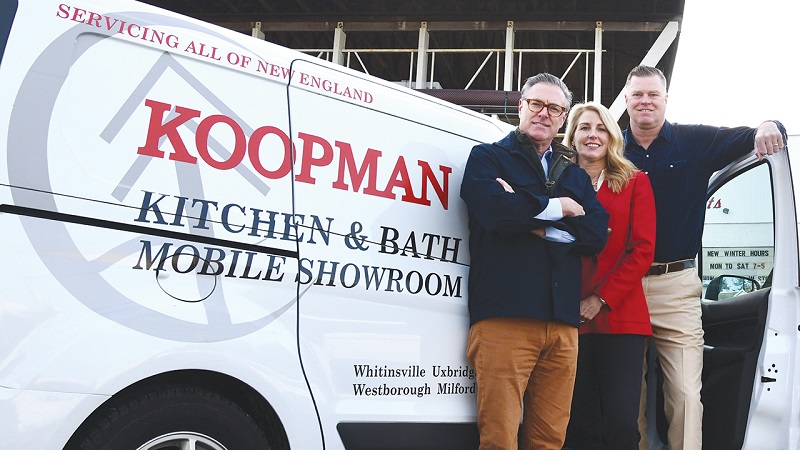
- Koopman Lumber, a third-generation family-owned lumber company serving Massachusetts communities since 1939, continues to reach new heights with family members recognized for their achievements as 2025 Business Leaders of the Year by the Worcester Business Journal.
- Denise Koopman Brookhouse, Chief Financial Officer of Koopman Lumber, honors her grandfather’s vision for the business while continuing to grow the company, and she shares her five key lessons for leading a family-owned business.
1. Build on Strengths and Define Roles
Working with family members can be challenging, but defining roles based on individual strengths can make a business stronger. Denise, along with her brother Dirk and husband Tony, have spent nearly 30 years learning how to work effectively together. They know their passions and how to use them in building the company.
“We’ve figured out what each of us is talented at and how to put ourselves in positions where we can contribute and help the business,” Denise says.
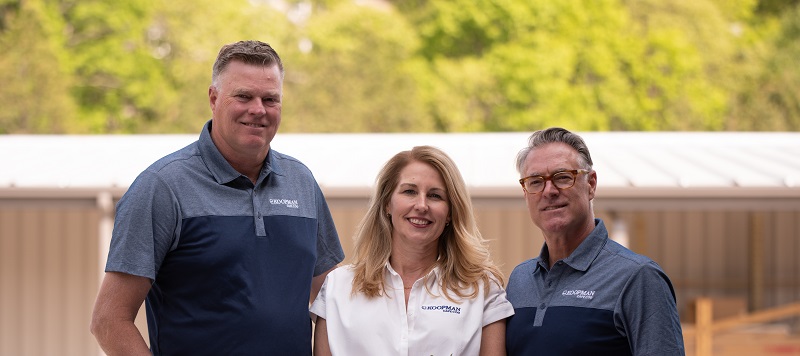
As part of the company’s Executive Team, Denise, Dirk and Tony also prioritize communication, meeting regularly. They also incorporate their children into bimonthly meetings and hold monthly manager meetings to keep sharing their vision and communicating about everyone’s work.
By identifying and leveraging individual talents and communicating openly and regularly, family-owned businesses can create a team that complements one another, ensuring stability and growth for the long-term.
2. Plan for the Next Generation’s Success
Leadership transitions can be challenging for any business, and family-owned businesses in particular require thoughtful approaches. Koopman Lumber has been intentional about succession planning, ensuring that each generation is well-prepared before taking on leadership roles. The company now has four generations of family involved.
“We require our children to work somewhere else for at least four years after college before they can enter the business,” Denise explains.
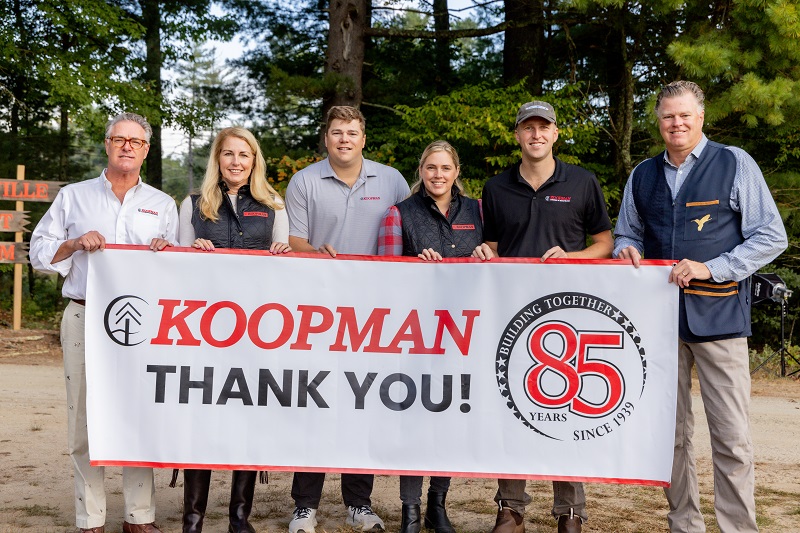
“It gives them valuable experience, which they can also bring back to the business, and helps them learn from different company cultures.”
In addition, when family members do join the company, they go through a nine-month rotational program, working in different departments to understand the full scope of the business. This structured approach ensures the next generation is both prepared and committed to the company’s success.
Planning for how future generations of family members come into the business is as important as determining the nuances of their financial ownership through stock and other financial structures. Relying upon a collaboration of outside experts, such as a family business specialist, trust advisor, lawyer, and an accountant, helps to align financial planning with succession planning for the next generation of family leaders.
3. Maintain a Strong Commitment to Community
A key part of Koopman Lumber’s identity is its deep connection to the communities it serves. And it all starts internally. People don’t often envision lumber as a career yet many employees start in stock roles and as cashiers, and make their way into sales roles and kitchen designers. Says Denise, “We very much value getting the right people on board and finding out where they fit best with their talents. We try to promote and grow colleagues from within because they know our culture and our values as owners in the company.”
Whether advancing employees from within, or hiring talent through acquisitions or from other lumber companies and big box retailers, Koopman Lumber considers itself a small company because of its talented group of employees who want to help others and their customers.
The company also actively supports local organizations, from sponsoring youth sports teams to giving back a portion of its profits to charities. Giving back to the community is a multi-layered approach. It’s important to Koopman Lumber to support the communities who support its business, while also giving back to the places where its employees live and work.
“We donate 10% of our profits back to charitable organizations,” Denise shares. “Our community supports us, and we believe in supporting them in return.”
Beyond financial contributions, Koopman Lumber stays actively involved in local business chambers and community events. This commitment not only strengthens the company’s relationships but also builds customer loyalty.
4. Adapt and Grow to Stay Competitive
With steady industry consolidation, Koopman Lumber has chosen to grow rather than sell. The company has expanded significantly, adding multiple locations in the past decade. “We know that to stay competitive, we have to keep growing,” Denise notes.
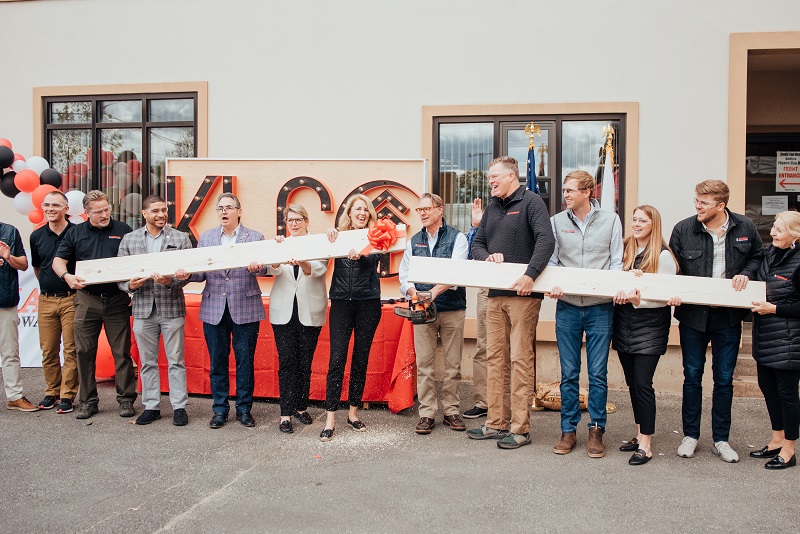
Growing the business while remaining independent is part of Koopman Lumber’s ethos. However, getting there and staying there requires continually recognizing and responding to changes in the market. For example, Koopman is part of a group of independent businesses from across the country that formed a lumber co-operative, putting their buying power together to secure competitive pricing on lumber in order to compete against the larger home improvement and lumber retailers.
Its growth has positioned Koopman Lumber as the largest independent, family-owned lumber company in Massachusetts. By staying independent, the company has been able to preserve its values while competing with larger corporate entities.
5. Work with Resources That Understand Your Business
A strong banking relationship is essential for any business looking to grow, and Koopman Lumber has found a valuable resource in Eastern Bank. For a family-owned business to continue for multiple generations, financial stability is just as important as strategic expansion. Koopman Lumber takes a disciplined approach to managing its finances, ensuring that growth is sustainable and the company remains resilient in changing market conditions.
This is ever more important as its business has doubled in the past five years and it has done an acquisition every year for the past four years. With 475 employees and 13 locations, Koopman Lumber recognizes that with continued consolidation in the industry, it is important to keep growing to keep competing. Says Denise, “To be a viable, financially successful business, we have to be financially stable and Eastern Bank is a big part of that.”
Koopman Lumber appreciates Eastern Bank’s responsiveness and ability to make quick decisions. “Eastern has been a huge part of our success,” Denise says. “They’ve given us the flexibility we need to expand, offering tailored banking solutions and interpersonal relationships. They make decisions quickly in terms of providing access to the capital and loans to help us grow. Eastern is there for us in a personal, meaningful way that they can provide as a community bank but with what feels like the resources of a larger institution.”
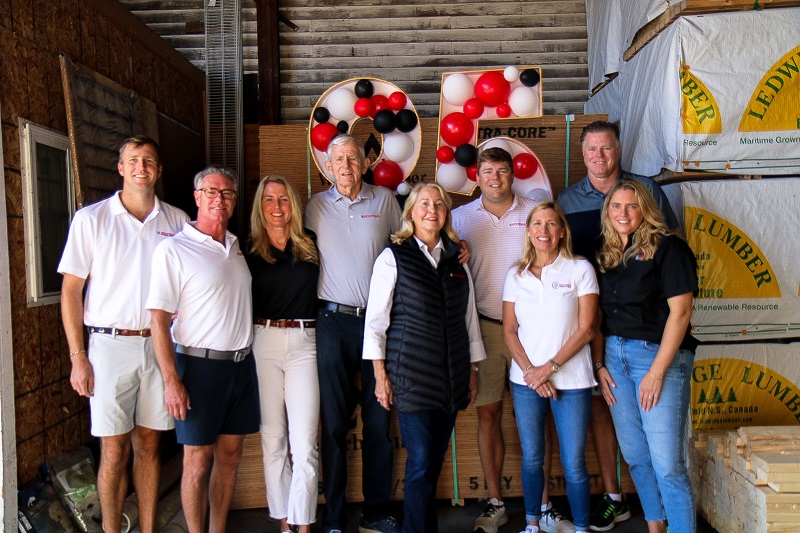
Koopman Lumber also created a Family Board of Advisors. Says Denise, “When we were looking to expand and grow through acquisitions, we needed a way to vet our different ideas. We wanted industry people who could help, and engaged with four people from across the country who either own lumber companies or are in the industry. We meet four times per year, including at our offices so they can see the business in real time.” This has been crucial to the company’s success. Koopman also networks with other family-owned companies to discuss similar business issues they are facing.
Balancing Growth with Legacy
“At the end of the day, we see ourselves as stewards of this business,” Denise reflects. “It’s not just about us – it’s about making sure the company is here for the employees, the customers and the generations to come.”
For other family-owned businesses, Koopman Lumber’s journey offers a valuable lesson: long-term success comes from thoughtful planning, strong values and a commitment to both people and progress. By focusing on these principles, any family-owned business can build a lasting legacy.
Eastern Bank provides a range of commercial financing offerings to help companies across many industries improve cash flow, increase efficiencies and build for the future. Commercial lending solutions include working capital/lines of credit, equipment/term loans, real estate loans, acquisition financing, asset-based lending and employee stock ownership plan-related financing. Contact a member of the Eastern Bank Commercial Lending team for insights on how they can help your business succeed.
The opinions expressed herein are those of the authors and do not necessarily reflect those of Eastern Bankshares, Inc., Eastern Bank, or any affiliated entities. Views and opinions expressed are current as of the date appearing on this material; all views and opinions herein are subject to change without notice. These views and opinions should not be construed as any specific recommendation. This material is for your private information and we are not soliciting any action based on it. The information in this content has been obtained from sources believed to be reliable but its accuracy is not guaranteed. There is neither representation nor warranty as to the accuracy of, nor liability for any decisions made based on such information.
More Commercial & Business Insights


